

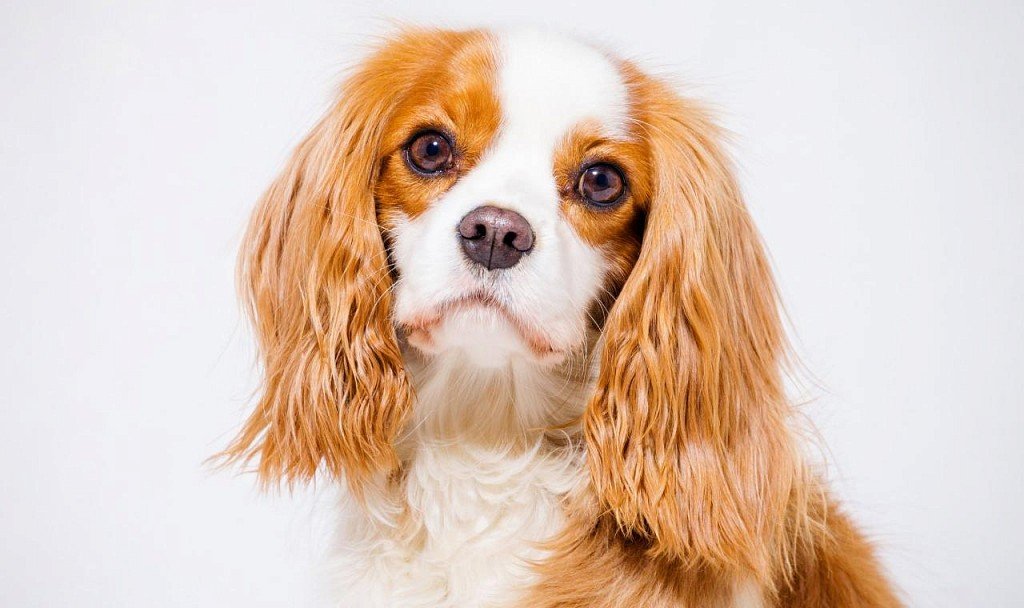
Cavalier King Charles Spaniel (or toy spaniel) is a small variety of spaniels of English origin. Although it has hunting instincts for feathered game, at all times this dog was considered a decorative household pet-companion. It is a cheerful fluffy busybody who possesses an expressive, coquettish appearance and a gentle character. It will liven up any home with its presence and will perfectly cope with the role of a reliable companion.
сontents
- 1 History of the breed origin
- 2 Description
- 3 Breed standard
- 4 Cavalier King Charles Spaniel Temperament
- 5 Cavalier King Charles Spaniel puppies
- 6 Breeding (mating) of the Cavalier King Charles Spaniel
- 7 Care and management
- 8 Training and education
- 9 Nutrition
- 10 Health and diseases
- 11 Pros and Cons of the Breed
History of the breed origin
The ancestor of the Cavalier King Charles Spaniel is the “toy spaniel”, which was extremely popular in England and Europe in the XVI–XVIII centuries. In later times, namely in the XIX and XX centuries, these dogs practically disappeared, so the restoration of the breed became an incredibly difficult task. The breed received its name in honor of the monarchs Charles I and Charles II, grandsons of Queen Mary. Both monarchs, like their grandmother the Queen, were extremely fond of spaniels. Charles II even issued a special decree according to which spaniels were allowed to be brought into any public place and even into the parliament building.
The King himself never appeared anywhere without being accompanied by at least two or three of his pets. After the death of King Charles II, the popularity of these dogs began to fade. In those days, small breeds in general were in fashion, so spaniels faced serious competition. They were replaced by pugs, which as an “Eastern wonder” captivated the minds of the European aristocracy. Moreover, pugs were even crossed with spaniels, because of which the latter subsequently received a shorter, flattened muzzle and a slightly modified skull shape.
Despite the fact that many noble persons turned away from the breed, in the estate of the Duke of Marlborough the traditions remained unchanged — they continued to breed real Cavalier King Charles Spaniels there for a long time.
Here is the direct English translation of your text, keeping the exact paragraph structure and formatting so that both versions match perfectly on your website:
At the beginning of the 20th century (1920–1925), the breed had almost disappeared. An enthusiast named Eldridge, who sought to revive the breed, could not find a single specimen at first. He searched for dogs at the famous Crufts exhibitions and from private owners. Later, with the support of the English Kennel Club, he offered a huge reward for that time — 25 guineas (pounds sterling) to anyone who would provide him with a “toy spaniel.”
The type of dog from the reign of Charles II was chosen as the standard, based on numerous paintings and figurines of that era. In 1928, a woman named Mostyn Walker provided Eldridge with a suitable dog. Unfortunately, Eldridge himself passed away just a month before that year’s exhibition, where Mostyn Walker’s dog named Ann’s Son was officially recognized as the breed standard. Later, in the middle of the century, several dogs were brought to America, where, after prolonged efforts, enthusiasts were able to register the Cavalier King Charles Spaniel with the American Kennel Club.
Description
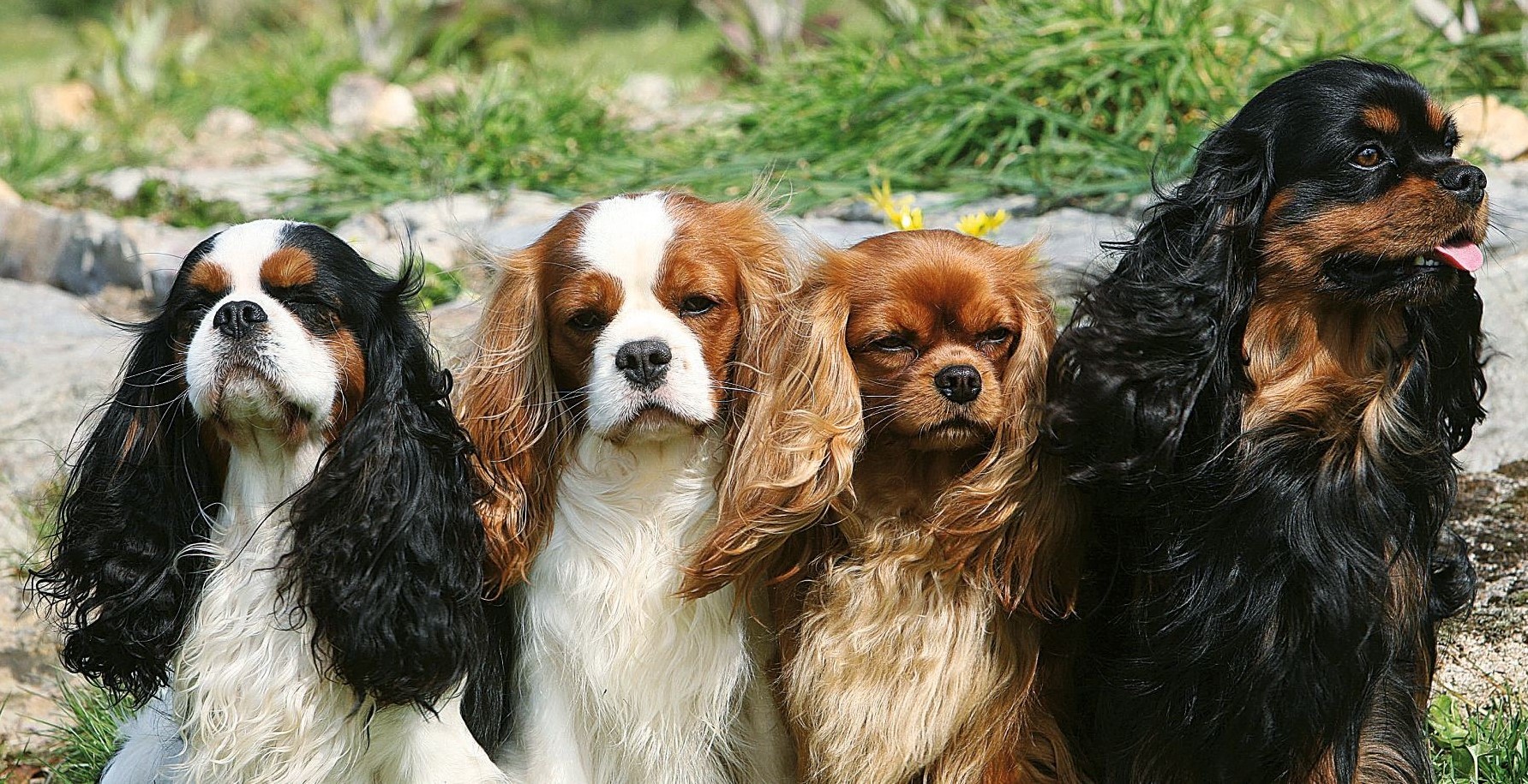
Both King Charles Spaniels and Cavalier King Charles Spaniels belong to the English Toy Spaniel section. However, while the “Kings” attract with their pronounced orientality (Eastern features), the “Cavaliers” conquer with their unique sophistication and true European charm.
Silky, straight or slightly wavy coat, sparkling gaze, and elegance of movement make them ideal pets for all connoisseurs of refined breeds. In addition, Cavalier Kings are natural photo models. They can be filmed while sleeping, while playing on a dandelion lawn, or in the owner’s arms — without worrying about the shot being unsuccessful. These “British aristocrats” are photogenic anywhere, anytime, and in any mood.
Cavaliers are, above all, royal sophistication and grace. It is believed that these cute creatures are the result of crossbreeding a Japanese Chin with a decorative Tibetan Spaniel.
Interesting fact. The breed was named in honor of King Charles II, who was its fierce admirer. The prefix “Cavalier” appeared thanks to the king of the Stuart dynasty — Charles I, who was also extremely fascinated by these dogs.
Breed characteristics.
Before delving into the details of the exterior, let’s consider the main numbers that define this breed:
Height: 30–33 cm at the withers.
Weight: from 5.4 to 8 kg.
This is truly a “toy” weight, making it easy to pick the dog up in your arms.
Life expectancy: 12–15 years on average.
Head.
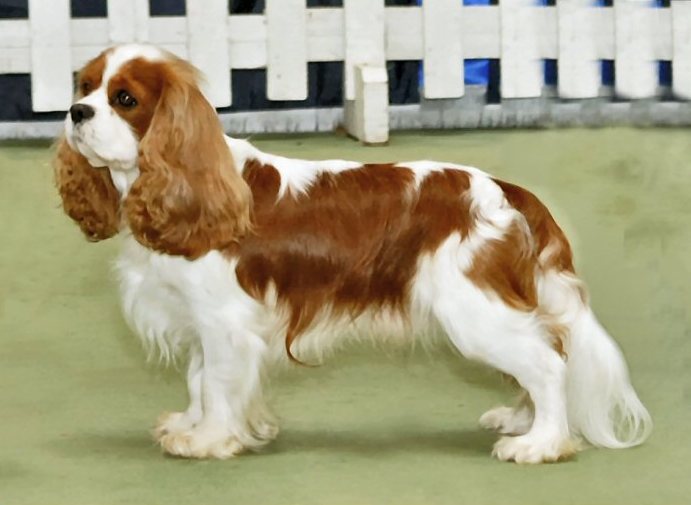
The head looks flat between the ears. The forehead is well-developed. The muzzle is conical in shape, somewhat flattened (but not as extremely as in pugs or pekingese).
Teeth.
Strong, with a correct scissor bite (the upper jaw tightly overlaps the lower jaw).
Ears.
Long, high-set, completely covered with thick and silky coat.
Eyes.
Large, round, wide-set. The color of the iris is deep dark chestnut. The gaze is expressive and gentle.
Body.
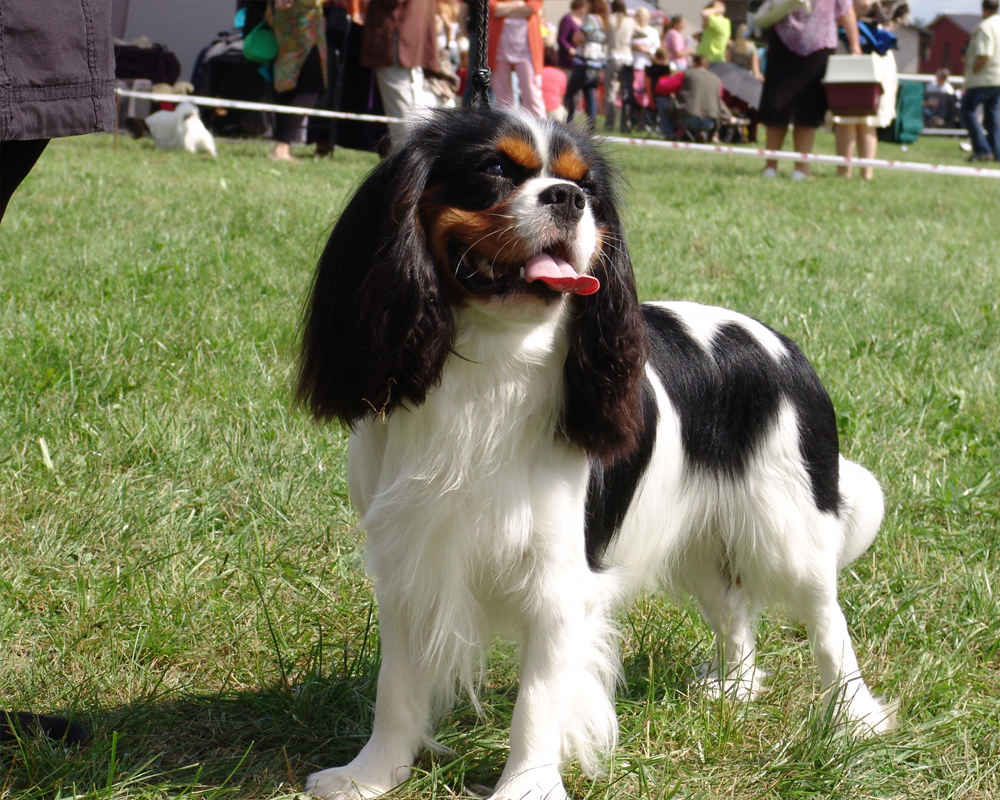
The body is compact (short), the back is straight, the ribs are well-sprung. The neck is of medium length, with a graceful light curve. The chest is of moderate size, the loin is short.
Paws.
Legs are parallel, with strong, well-developed bone structure. Paws are compact, with distinct pads.
Tail.
Carried at the level of the back or slightly higher. Previously, it was docked by two thirds, which is practically not practiced nowadays.
Coat.
Long, very silky to the touch. It can be either perfectly straight or with a slight wave.
Color options:
-
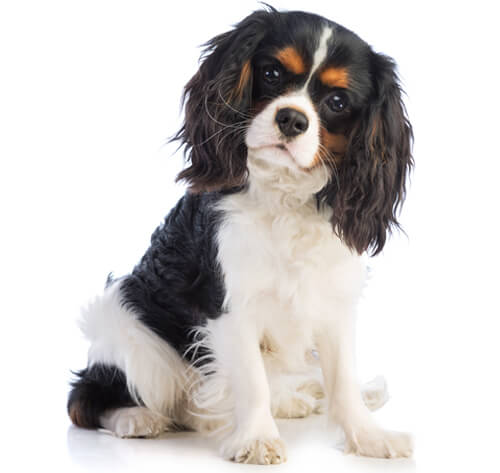
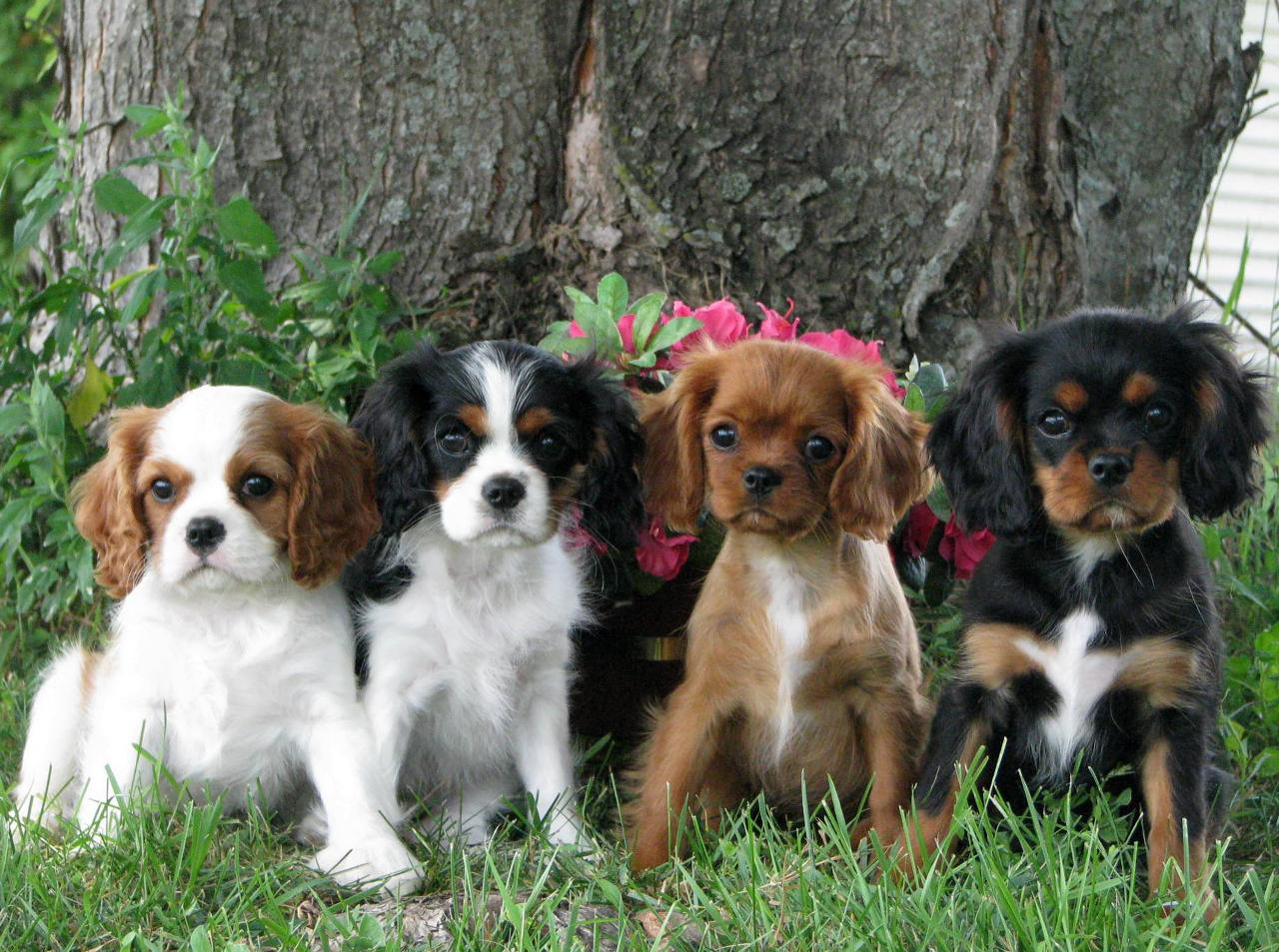
Black and tan piebald: tricolor (black, white, red).
-
Black and tan: black with bright red markings.
-
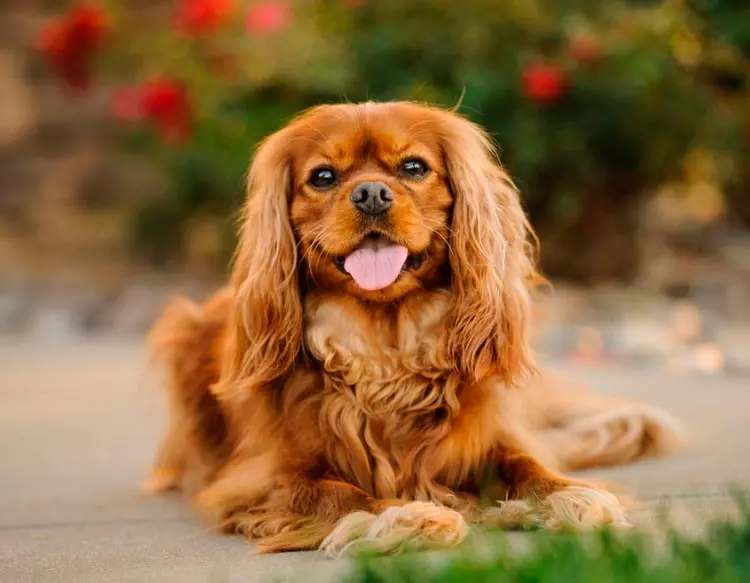
Ruby: rich dark red color.
-
Blenheim: white and chestnut coloring.
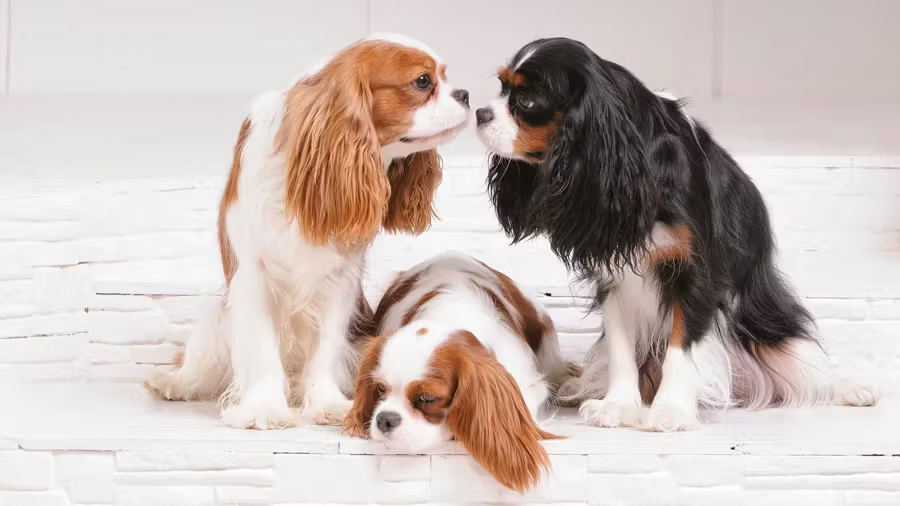
Interesting fact: The Blenheim spot is a unique feature of the breed, named after the Battle of Blenheim. These red markings, shaped like an hourglass or a fingerprint, are located symmetrically on the forehead. An important condition of the standard is the presence of white space between these markings and the dog’s ears. According to legend, the Duchess of Marlborough, waiting for news from her husband from the battle, nervously stroked her pregnant spaniel on the head with her finger — and the puppies were born with such a characteristic spot.
Breed standard
Today, the main reference for breeders worldwide is the Federation Cynologique Internationale (FCI) standard No. 136. According to it, the ideal Cavalier King Charles Spaniel is an active, graceful, and well-balanced dog with a sincere, gentle expression. The breed is characterized by an absolute absence of aggression and nervousness.
The dog should be compact but not stocky, with a silky coat and harmonious proportions that emphasize its royal origin. Any significant deviations from this description are considered faults or defects.
Faults and potential defects
All individuals that show any deviations from the official breed standard are considered defective. Of course, most external faults (for example, a slightly shorter coat or a not quite perfect eye shape) do not close the animal’s access to exhibitions, but the chances of getting the highest score are reduced practically to zero.
Disqualifying features
Serious developmental defects are a completely different matter. A dog found to have them will not be admitted to any professional exhibition. Specifically for Cavalier Kings, the grounds for disqualification are:
-
Weight and height: significant deficiency or excess of weight (going beyond the standard of 5.4–8 kg).
-
Color: non-standard colors that are not provided for by the rules (for example, solid white or too large white spots on a ruby color).
-
Pigmentation: depigmented (pink or spotted) nose lobe.
-
Jaws: “cleft lip”, atypical bite (undershot or overshot).
-
Movements: incorrect gait (pacing or “hackney” — when a dog raises its front legs too high, like a circus horse).
Cavalier King Charles Spaniel Temperament
The Cavalier King Charles Spaniel is a purely decorative breed, whose main purpose is to be a loyal friend. This trait has been cultivated in the breed for hundreds of years. In the Middle Ages, these dogs lived in luxury, and although times have changed, they still adore home comfort, soft pillows, and constantly being close to their owner.
These dogs do not just love affection — they need it. A Cavalier adores being held in your arms or scratched behind the ear.
Important nuance: The breed categorically cannot withstand separation from the family. If you are planning a vacation, be prepared to take your pet with you — leaving them with friends or in a pet hotel is almost impossible, as the dog perceives loneliness as a tragedy. A lack of attention leads to apathy: the animal becomes sleepy, loses interest in life, and falls into depression. In general, Cavaliers have a soft and compliant temperament, yet they are natural psychologists. If the dog is overly pampered, it can become capricious and may even begin to react inadequately to family members.
Usually, they are extremely friendly to everyone, especially if a person offers a treat. Due to their trusting nature and small size, they are absolutely unsuited for the role of a watchdog — strangers are just new friends to them. Despite their status as a “couch” dog, Cavaliers have a normal energy level:
They love active games and walks, although they can sometimes be lazy. Interestingly, most representatives of the breed love to splash in the water to madness.
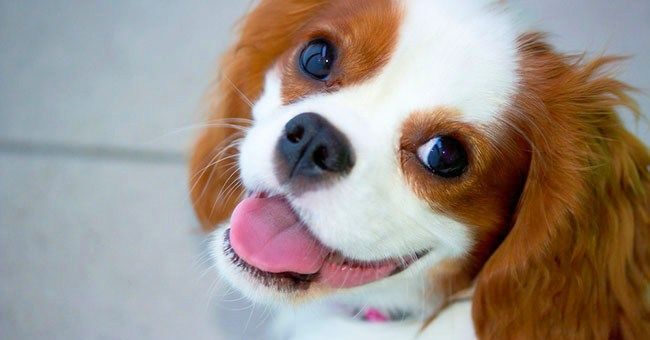
Do not forget about their roots! During a walk, a Cavalier can suddenly rush to chase a lizard, a bird, or other small creatures, so they should be closely watched. Barking for a Cavalier is a way to tell the world about their good mood, so they can be quite talkative.
Children and other animals
Cavaliers radiate calmness and rarely show nervousness.
-
Children: They adore children and show incredible patience with them. However, it is important to teach a child how to behave correctly with the dog: Cavaliers have a rather fragile skeleton, and accidental roughness during play can lead to injuries.
-
Other pets: They get along wonderfully with cats and other animals, although they can sometimes behave shyly around large dogs.
Cavalier King Charles Spaniel puppies
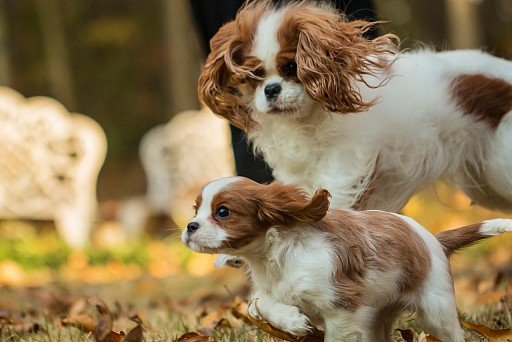
Choosing a puppy is a responsible step that requires a combination of cold calculation and your intuition. For the future pet to become a true ornament of the home and a loyal friend, it is important to pay attention not only to its appearance but also to its genetic health and the conditions in which it was raised. Remember that the right choice today is the guarantee of long years of a happy life together with your “little aristocrat.”
How to choose a Cavalier King Charles Spaniel puppy
When choosing a baby of this breed, you can follow the same basic principles as when buying any other purebred dog, however, there are a few specific moments:
-
Checking the kennel and health: Avoid places where unsanitary conditions and mess prevail. Be sure to request the genetic test results from the breeder to detect breed-specific diseases: dry eye syndrome, curly coat syndrome, and episodic falling syndrome.
-
Choosing the sex: The temperament of Cavaliers does not depend on their sex. Both boys and girls are equally affectionate and attached to the owner, so choose the one who is more to your liking.
-
Pedigree and parents: Meet the puppy’s parents and study their pedigree. This will help ensure that the breeding was not inbred (between close relatives), which minimizes the risk of hereditary diseases.
-
Baby’s behavior: Choose an active, curious puppy that shows a lively interest in toys. Lethargy, hesitation, or fear are signs of physical or psychological exhaustion of the animal.
-
External signs: Pay attention to the cleanliness of the eyes and ears, as well as the condition of the skin — they should be without visible problems. The puppy should gladly make contact.
-
Documentary support: Make sure that at the time of sale (not earlier than 2–3 months), the baby has a veterinary passport with vaccination marks and an official pedigree.
Puppy cost
The cost of Cavalier King Charles Spaniel puppies directly depends on their pedigree and external parameters, meaning their belonging to a certain class. Today, prices from professional breeders are distributed as follows:
-
Pet class (household pets): The average price for a baby with a veterinary passport and metric is approximately $330 – $385.
-
Show class (future champions): Puppies with reference appearance, which have high exhibition potential, cost approximately from $550.
-
Elite class (interbreeding): Traditionally, the most expensive are puppies from parents from different countries. The cost of such pets starts from $715.
Breeding (mating) of the Cavalier King Charles Spaniel
The process of breeding this breed requires a responsible approach, because the health of future puppies is laid down at the stage of preparing the parents.
-
First heat: In females, it usually occurs at the age of 6–14 months.
-
Duration: The average heat period is 20–22 days.
-
Optimal age for breeding: Experts recommend conducting the first mating no earlier than when the dog turns 20 months old.
-
Favorable days: The best time for mating is considered to be the 11th–15th days from the beginning of the heat.
Preparation and the mating process
-
Before starting, the dogs must be well-walked, but not fed.
-
It is better to organize the first acquaintance on neutral territory — in a quiet, uncrowded place where nothing will distract the animals.
-
After acquaintance, the dogs are transferred to the “boy’s” territory.
-
The mating itself lasts on average 5–10 minutes.
-
To be sure of the result, a control mating is carried out 1–2 days after the first one.
Pregnancy and offspring
-
Pregnancy in Cavaliers lasts from 52 to 72 days.
-
On average, 4–5 puppies are born in one litter.

Care and management
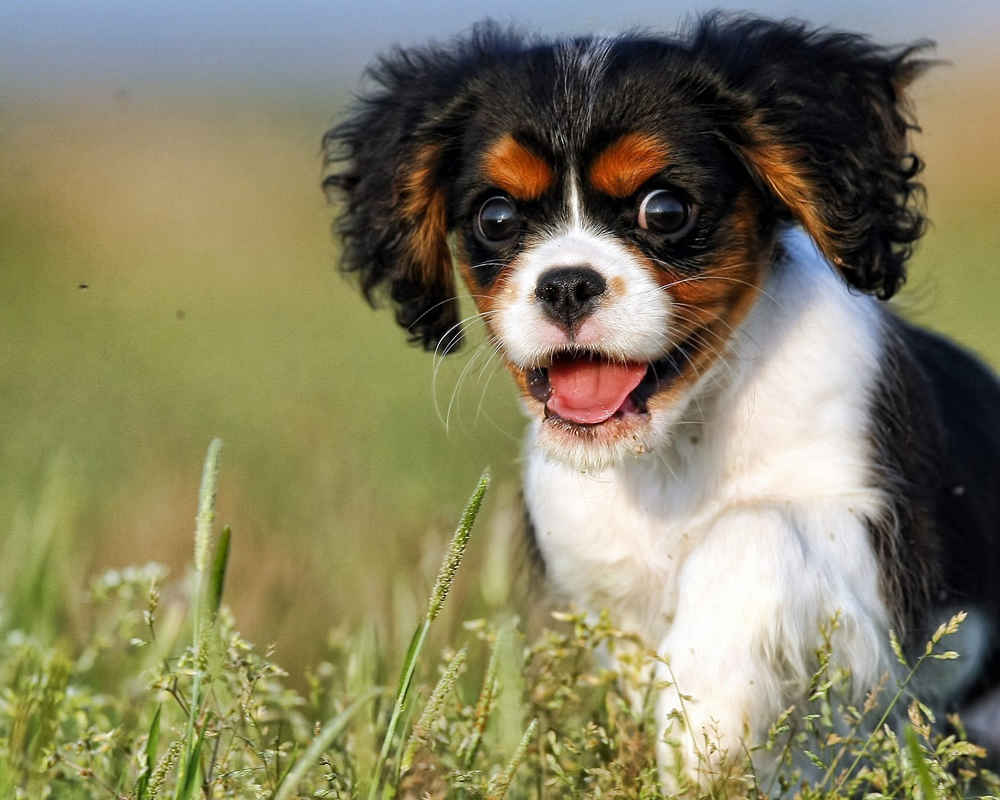
Cavalier King Charles Spaniels feel great in apartment conditions. However, this does not mean that the dog does not need walks. To maintain the good shape and mood of the pet, certain rules should be followed:
-
Routine: It is necessary to walk the dog twice a day for 40–50 minutes.
-
Activity: During the walk, it is important to give the pet an opportunity to actively run and play.
-
Prevention: Remember that the lack of energetic games quickly leads to obesity, to which this breed is prone.
Hygiene and grooming Caring for a Cavalier is not overly complicated, but it must be regular:
-
Coat: Brush the silky coat 3–4 times a week to avoid tangles.
-
Ears: Be sure to check the condition of the long ears 2–3 times a week.
-
Eyes: Eye cleaning should be a daily procedure.
-
Bathing: It is recommended to wash the dog 2–4 times every 2–3 months.
-
Claws: Trim the claws approximately three times a month.
Cavaliers are very heat-loving dogs. They find it difficult to tolerate extreme heat, dampness, and cold.
-
Protection: It is important to protect the pet from hypothermia.
-
Winter wardrobe: In the cold season, be sure to take the dog out for a walk in special clothes.
Training and education
Cavalier King Charles Spaniels are very intelligent and easily master all the subtleties of the educational process. However, this does not stop them from turning on “silly mode” from time to time. If your pet suddenly stops following commands, the reason lies not in stubbornness, but in mundane boredom. Perhaps the training was too long or too serious, which simply tired the dog. Cynologists emphasize several rules for raising Cavaliers:
-
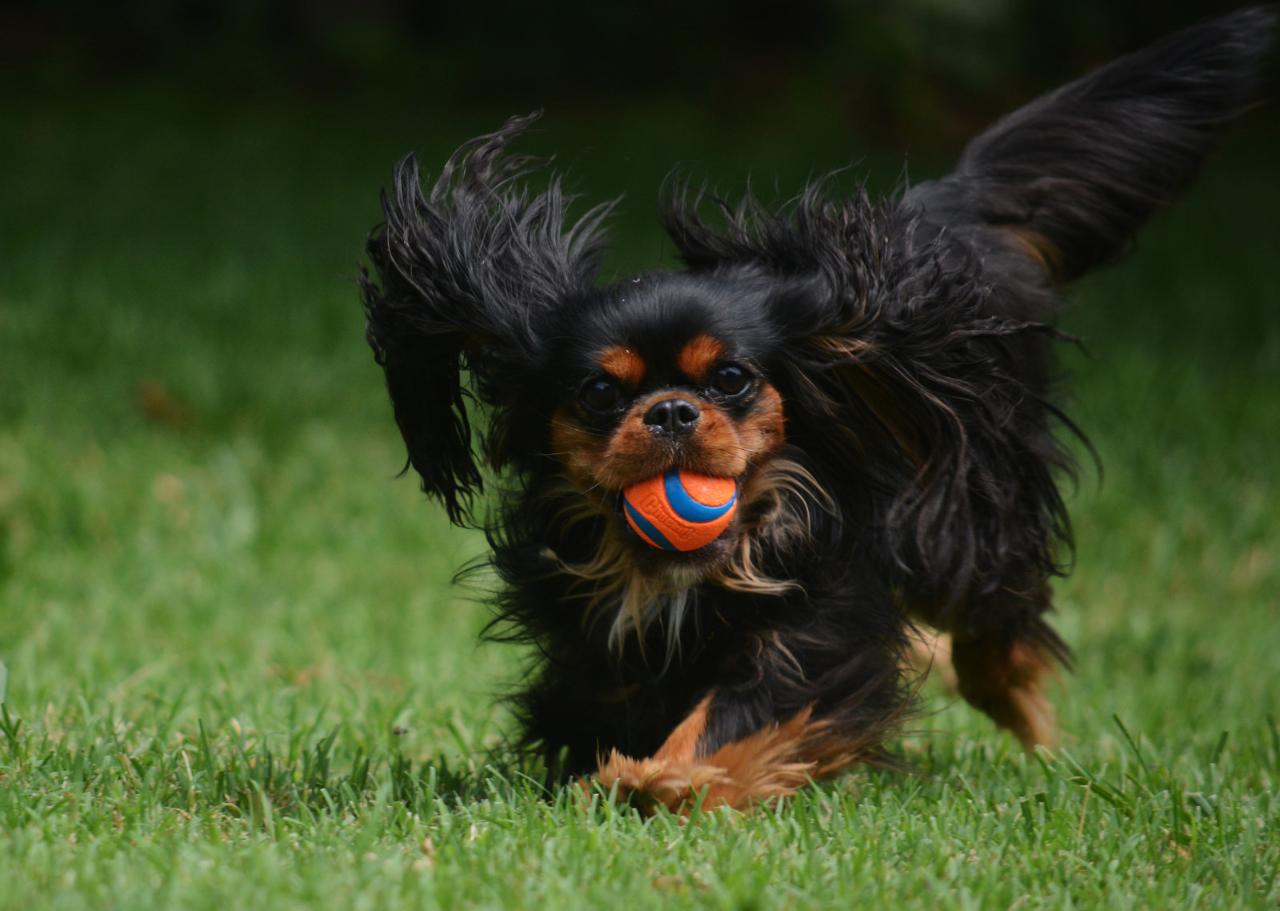
Game form: It is necessary to train the dog exclusively in a game form and as gently as possible.
-
Rejection of aggression: Most representatives of the breed are naturally quite timid. If you raise your voice at the dog during classes, it may lose interest in learning forever.
-
Motivation: Use your pet’s favorite treats to maintain their interest in the process.
Despite their soft temperament, Cavaliers are no strangers to hunting habits. Seeing a cat or a rodent on the street, the dog will definitely try to catch up with the “prey.”
Important: Caught up in the excitement, the dog can easily get lost. Therefore, the commands “Drop it!” (or “No!”) and “Heel!” (or “Close!”) must be learned in advance and reinforced as firmly as possible.
Preparation for exhibitions
If you are preparing a show-class dog, training begins at 4–5 months:
-
Exhibition stance: First, the puppy is encouraged with a treat for the correct pose. Only when the association “stance = treat” is formed, can you introduce the command “Stand!”.
-
Handlers’ advice: It is not recommended to teach the command “Sit!” until the dog takes part in exhibitions. In an unfamiliar environment, a confused pet can mix up the commands and sit down instead of standing in a stance.
Nutrition
Nutrition is the foundation of longevity for your future “Cavalier.” Since this breed has an excellent appetite but is prone to excess weight, the diet must be balanced and strict.
Three types of nutrition are acceptable for Cavalier King Charles Spaniels: “natural food,” dry food, or a mixed diet. Most experts prefer a natural menu as more beneficial, but it requires a careful calculation of calories.
Natural diet
Cavaliers are prone to rapid weight gain, so the food should be nutritious but not fatty.
-
Meat: Raw or boiled lean varieties (beef, rabbit, turkey).
-
Grains: Rice, buckwheat, or oatmeal.
-
Dairy products: Low-fat cottage cheese and kefir. Sour cream and cream are prohibited.
-
Vegetables and fruits: Cavaliers often show “vegan” preferences. It is beneficial to give them vegetable stew, salads, zucchini, cucumbers, and berries.
-
Eggs: From time to time, it is useful to add a yolk or a quail egg to the diet.
-
Fish: Only marine and boneless (river fish is prohibited).
Dry food
If you choose commercial food, it is important to remember the breed’s predisposition to food allergies.
-
Choose foods of at least premium class or holistics.
-
Carefully study the composition: avoid options containing chicken or grains if you notice signs of an allergy.
Table of prohibited products
To preserve the dog’s health, permanently exclude the following from the menu:
| Category | Prohibited products |
| Meat and sausages | Pork, fatty types of meat, any sausage products. |
| Bones | Tubular bones (can damage the stomach). |
| Sweets and pastries | Candies, chocolate, pastries, white bread. |
| Vegetables and mushrooms | Legumes, mushrooms, onions, garlic. |
| Spices and other | Salty, spicy dishes, pearl barley. |
Tip: If you are into organic gardening, your homegrown zucchini and cucumbers will make a wonderful and safe vitamin supplement for your dog in the summer.

Health and diseases
The breed is characterized by a predisposition to cardiac and other pathologies. Most often, the following are diagnosed in Cavalier King Charles Spaniels:
-
Syringomyelia — a disease that affects the brain and spine; it is common in Cavaliers.
-
Episodic falling — a condition that is often confused with epilepsy, but the spaniel remains conscious during the seizure.
-
Patellar luxation.
-
Arthritis.
-
Arthrosis.
-
Endocarditis.
-
Diabetes mellitus.
-
Keratoconjunctivitis sicca — “dry eye” syndrome, which without treatment can lead to blindness.
-
Heart valve insufficiency (mitral valve disease).
-
Hip dysplasia.
Owners may also encounter a phenomenon such as nervous scratching. The average life expectancy of representatives of this breed is 10–12 years.
Pros and Cons of the Breed
Before making the final decision to bring a Cavalier King Charles Spaniel into your home, it is essential to weigh all the pros and cons of these little aristocrats:
Pros:
-
Extremely sweet, affectionate, and good-natured temperament.
-
Excellent adaptation to apartment living and small spaces.
-
Perfect coexistence with children and other pets (including cats).
-
Absolute absence of natural aggression or nervousness.
-
High intelligence and ease of training through play.
-
Elegant, aristocratic, and highly photogenic appearance.
Cons:
-
Absolute dependence on human companionship and total intolerance to loneliness.
-
Proneness to separation anxiety and depression if left alone.
-
Genetic predisposition to serious health conditions (cardiac and neurological).
-
Tendency to gain weight and the need for strict diet control.
-
Presence of a hunting instinct that requires controlled leash walks.
-
Requirement for regular grooming of their silky coat to prevent mats.

The Cavalier King Charles Spaniel is an ideal companion for both single people and large families. Thanks to its soft temperament, this breed perfectly adapts to the rhythm of life and mood of its owner.
However, future owners should remember the main characteristic of these “little aristocrats”: they categorically cannot withstand loneliness. Never leave your pet alone for a long time, because separation from a loved one for a Cavalier is a true universal grief. Choosing this breed, you get not just a dog, but a devoted soul that needs your constant presence and care.


