

The Japanese Spitz is a small dog from the Spitz group with a fluffy, snow-white coat. Known for their lively temperament, they are obedient and easy to train. This amazing breed combines opposites: they are alert watchdogs that bark at strangers, yet their barking is brief and purposeful. Remarkably, they aren’t provoked by other barking dogs, making them ideal for urban parks—a trait more common in large breeds.
сontents
History of the Breed Origin
The Japanese Spitz was artificially developed by breeders in Japan during the 1930s. They were created by crossing several different types of Spitz breeds. The breeding program primarily relied on white German Spitz dogs, which were brought to Japan from China for a dog show in Tokyo in 1921. In their homeland, representatives of this breed are called Nihon Supittsu.
For five years, breeders set a goal to gather as many similar breeds as possible to create an optimal gene pool. This foundation allowed them to establish a unique Japanese breed. This period coincided with Japan’s difficult transition and preparations for World War II — hostilities began just one year after breeders finalized their work and officially established the breed in 1936.
World War II severely disrupted the plans of dog breeders, nearly leading to the breed’s total extinction. Following a period of expansion, Japan suffered a devastating defeat, resulting in an enormous loss of life. The population, starving from the prolonged conflict, struggled for survival, and unfortunately, using dogs for food became a common occurrence during those desperate times.
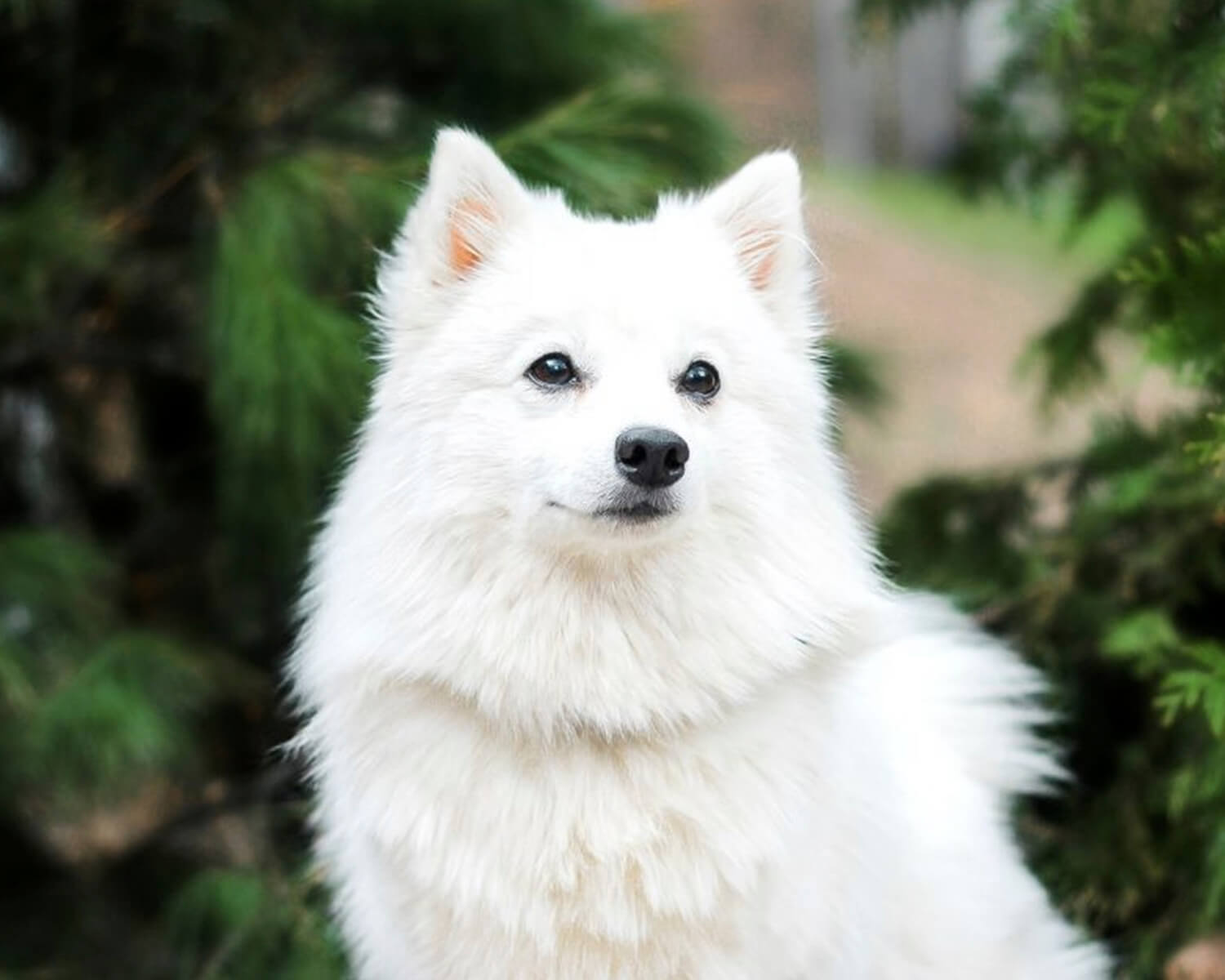
It was only through the incredible efforts of enthusiasts that the Japanese Spitz breed was preserved, and by the late 1940s, the primary breed standard was established. Around the same time, they gained official recognition from the Japan Kennel Club. The Japanese Spitz quickly grew in popularity, and in the early 1950s, several dogs were brought to Sweden, marking the beginning of the breed’s journey across Europe and America.
One by one, international organizations around the world began to recognize the Japanese Spitz as an independent breed. However, the American Kennel Club (AKC) still does not recognize the breed to this day, as it bears an extraordinary resemblance to the American Eskimo Dog.
Description
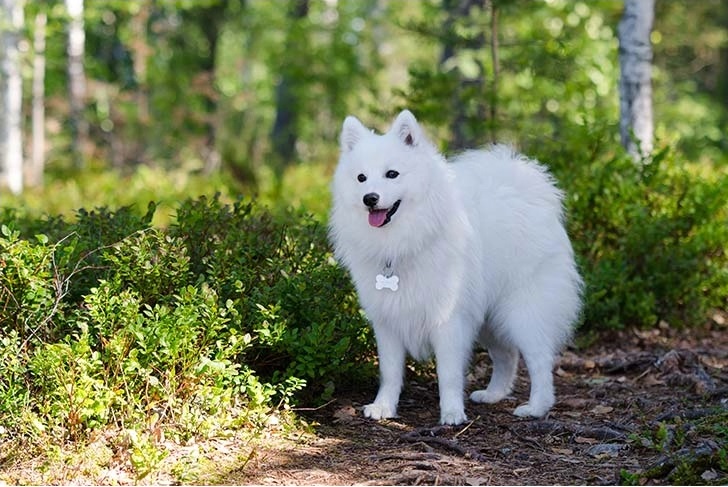
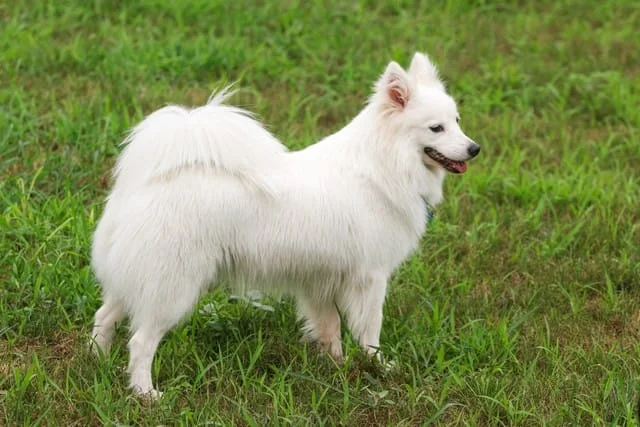
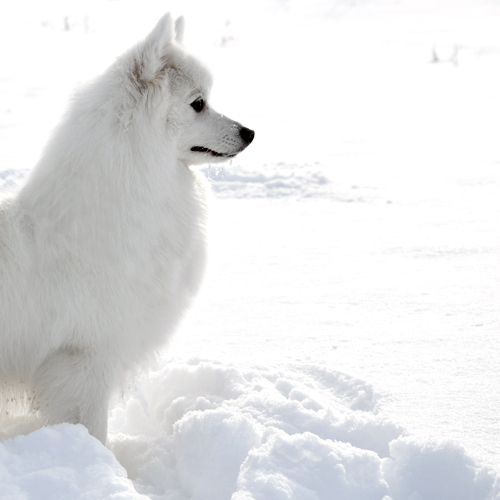
The Japanese Spitz is a small dog covered in a thick, fluffy coat. They closely resemble their closest relatives in both appearance and temperament. They feature short legs, an elongated muzzle, pointed ears, and black eyes. The tail is plumed and typically curled over the back. Although this smiling “Asian” may seem like a carbon copy of the German or Volpino Italiano (Florentine) Spitz, it possesses distinct physical characteristics. For instance, compared to its European relatives, it has a more elongated torso (a height-to-body-length ratio of 10:11), not to mention the distinctly Oriental eye shape, which is atypical for Spitz-type dogs. The snow-white coat of the “Japanese” is another hallmark of the breed. No yellowness or transitions into milk or cream shades are permitted; otherwise, it is not a Japanese Spitz, but a poor imitation.
Breed Features
High Trainability: These dogs are highly responsive to training, which is why they are often featured in various circus shows. Abroad, “Japanese” dogs have long and successfully competed in agility trials.
Lack of Prey Drive: Hunting and chasing instincts are absent in the Japanese Spitz, meaning they do not view every cat they encounter as prey.
Loyalty to One Master: Even if the pet lives in a large family, they will recognize only one person as their true master. Consequently, this person must take primary responsibility for the dog’s training and education.
Regional Popularity: The breed is widespread and highly popular in Scandinavia, as well as in Finland.
Head
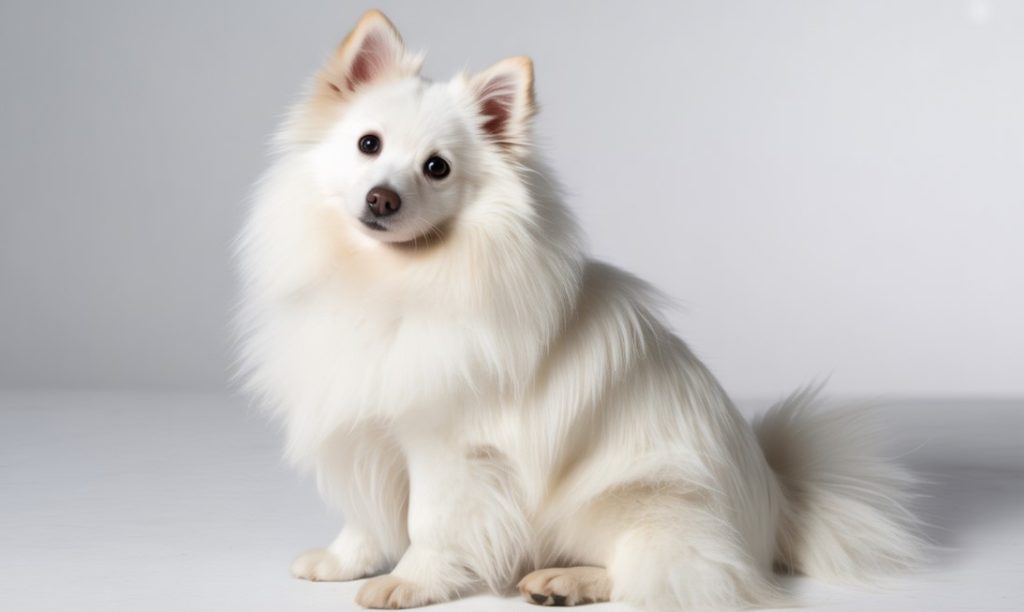
Rounded and relatively small, broadening toward the occiput. The muzzle is elongated and wedge-shaped, similar to a fox, with a clearly defined stop.
Jaws
Small but strong, meeting in a perfect scissor bite. The teeth are small but quite sturdy.
Ears
Erect, triangular, and medium-sized. They are set close together with a slight fringe and point strictly forward.
Eyes
The dark eyes contrast beautifully with the white coat, giving this “snow-white Oriental” an expressive and charming look. They are small, dark, and slightly almond-shaped (slanted) with dark, contrasting rims.
Body
Slightly elongated with a straight back. The neck is of moderate length with an elegant curve that blends perfectly into the overall silhouette. The plumed tail is carried over the back, serving as an additional ornament. The abdomen is well tucked up, and the chest is broad.
Legs
Long with short hair on the front and small “trousers” (fringing) on the back of the legs.
Coat
Exclusively snow-white and longer on the body. It is very dense due to a soft undercoat that supports the outer coat, giving the dog a ball-like silhouette. Areas with relatively short hair include the wrists, pasterns, muzzle, ears, and the front of the forelegs.
Color
The Japanese Spitz must be pure white. No other colors or shadings are permitted.
Breed Standard
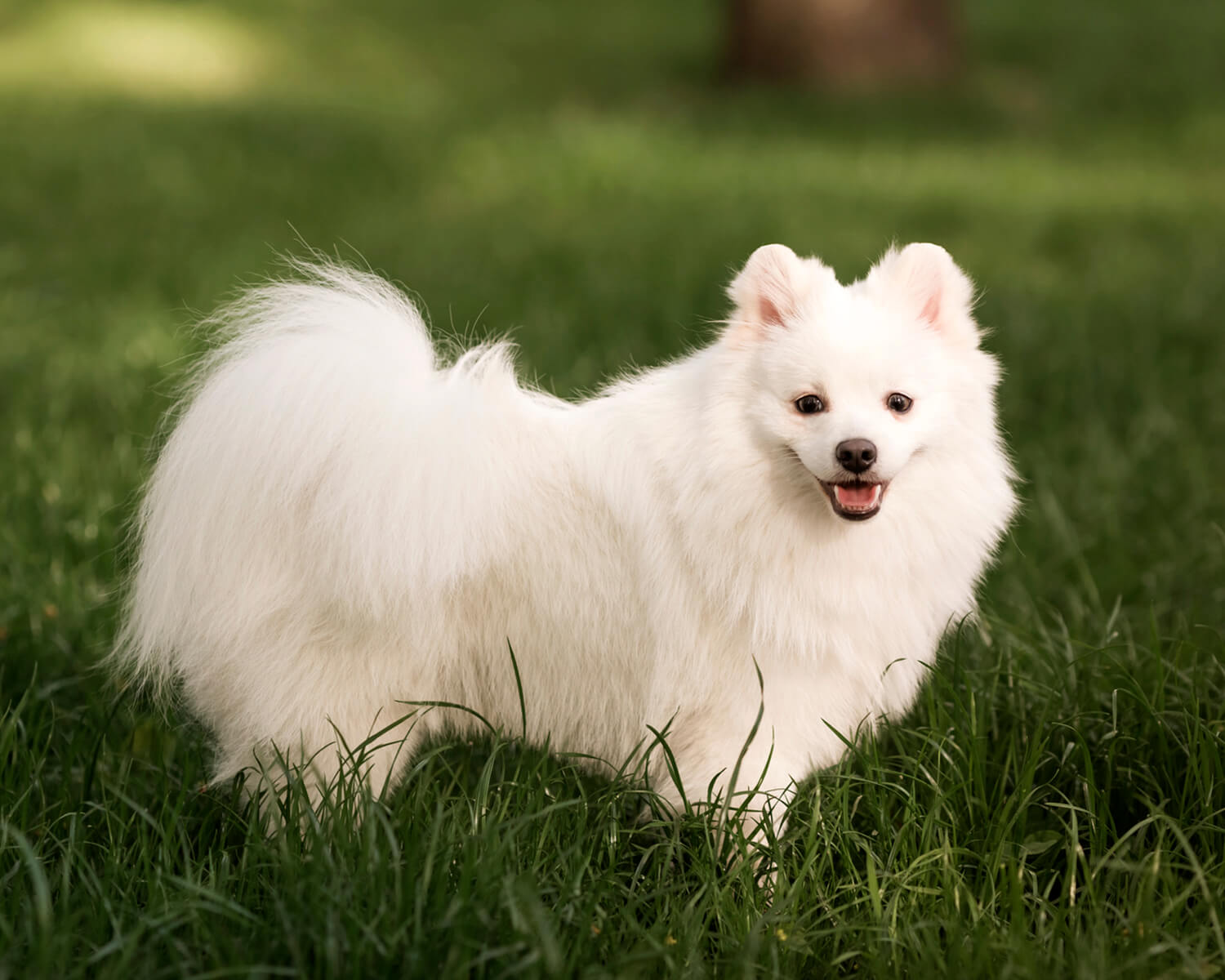
The Japanese Spitz Breed Standard (FCI №262) describes a small companion dog with a luxurious, pure white coat, noble posture, and a cheerful temperament. The standard is fundamentally based on functionality, balance, and harmony. The Japanese Spitz possesses a harmonious and compact build.
-
Height: Males: 30–38 cm; Females: 28–35 cm. Males should be noticeably more masculine, while females are smaller and more feminine.
-
Weight: Typically between 5–10 kg (depending on height).
-
Lifespan: 12–15 years.
Any deviations from the official standard are considered defects that can impact a Japanese Spitz’s show career. Most commonly, points are deducted for bite irregularities, overly curled tails, excessive shyness, or conversely, a tendency to bark without cause. Full disqualification typically applies to individuals with drooping ears or a tail that is not carried over the back.
Japanese Spitz Temperament
These miniature beauties always look tidy, despite their love for playing in the mud. Their secret lies in their “cat-like” cleanliness and the unique structure of their fur. Because of this, you won’t be able to avoid admiring glances and compliments while out for a walk.
Furthermore, this “Northern Asian” is very easy to train. At the owner’s request, they can learn to:
-
Refrain from barking at neighbors and guests;
-
Learn and perform entire circus routines;
-
Perform acrobatic tricks.
High energy levels and a love for various games are qualities that stay with the Japanese Spitz well into their senior years. These dogs can walk for hours, play with other dogs, and socialize with people, always expressing their friendly nature and affection.
They are excellent companions for anyone in need of a four-legged friend. This is an ideal breed for families with children—the Japanese Spitz adores kids and loves spending time with them. It is not recommended to leave these dogs alone for long periods; even a vacation abroad can cause them significant stress. They form an intense bond with their owners, so in your absence, they may lose their appetite, whine, and generally cause a lot of worry for the friends looking after them.
The Japanese Spitz requires proper upbringing, primarily focusing on “stop” or “recall” commands to shape a well-adjusted character. They should not be over-pampered; otherwise, they may begin to feel they can get away with anything. An un-trained dog’s character can sour, leading them to pester people on the street or even cause chaos at home when you are away. They possess a high level of intelligence that needs to be directed constructively.

Japanese Spitz Puppies
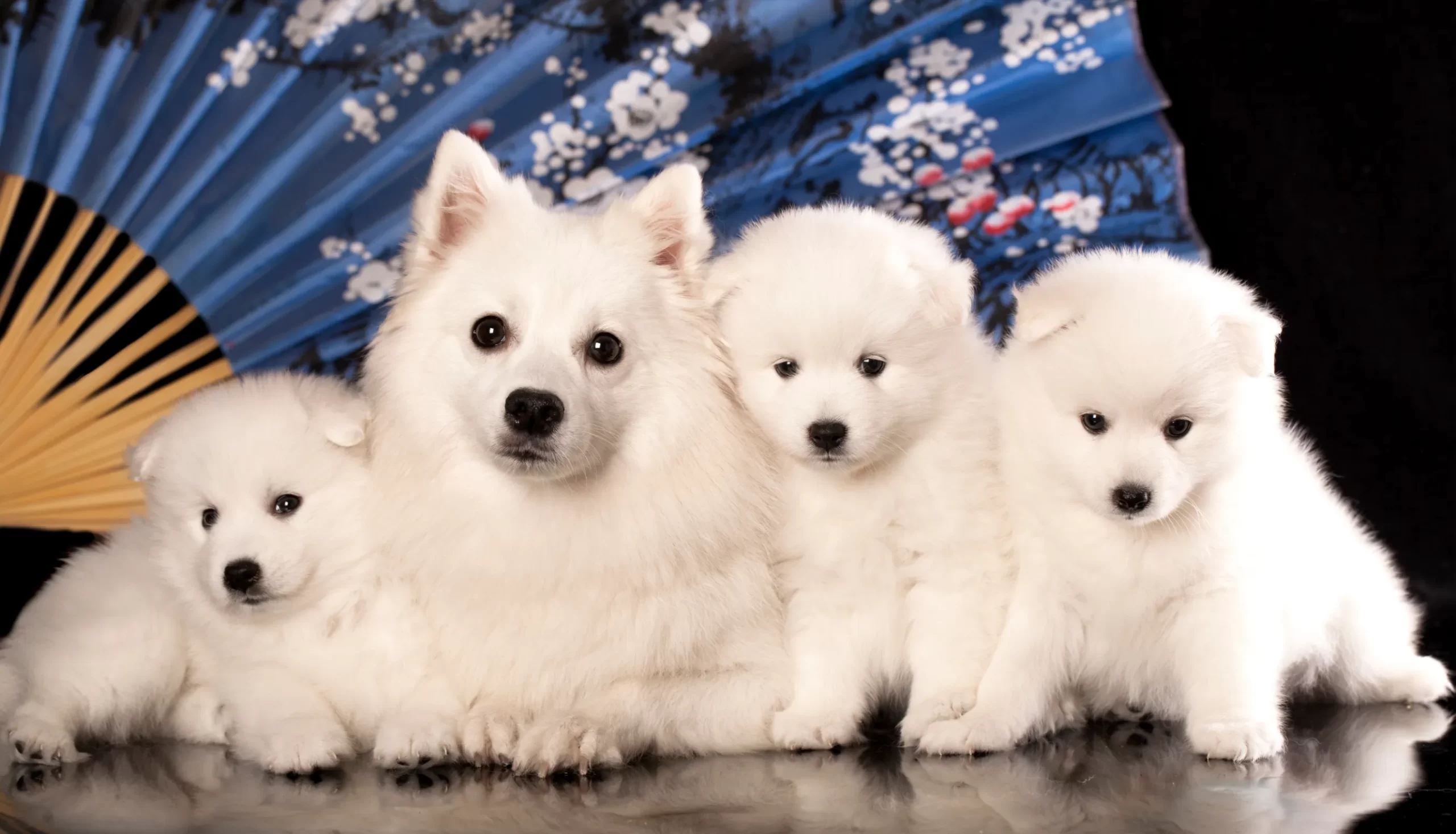
Since the 1950s, these miniature “snow-whites” have been highly popular in the Far East. Today, reputable kennels can be found all across Europe and Australia. Before purchasing, it is essential to check the documents and ensure a veterinary passport is present with all necessary vaccinations. It is also wise to inquire about any genetic diseases in the family lineage.
How to Choose a Puppy
-
Gender Differences: Male Japanese Spitz tend to look larger and more “stately” than females due to their thicker, more luxurious coats. If the visual “wow factor” is a priority for you, consider choosing a male.
-
Visit Dog Shows: Don’t hesitate to attend breed exhibitions. Amateur or irresponsible breeders rarely participate in these events, so shows are the perfect place to meet experienced specialists and secure a puppy with a strong pedigree.
-
Compare the Litter: Everything is understood through comparison. Even if the first puppy shown by the breeder seems perfect, insist on observing the other puppies in the litter as well.
-
The Right Age: There is little point in buying a puppy younger than 1.5–2 months. At a very young age, specific breed traits are not yet clearly defined. By rushing, you risk purchasing a dog with appearance flaws or even a mixed breed.
-
Observe Living Conditions: Pay close attention to how the dogs are kept in the kennel. If the animals are confined to small cages or appear unkempt, it is best to look elsewhere.
-
Temperament Check: Do not confuse aggression with bravery. Avoid puppies that growl at you during your first meeting. Such behavior indicates psychological instability or innate malice, which is strictly unacceptable for this friendly breed.

Cost of Puppies
The Japanese Spitz is not the most common breed, which explains its significant price tag.
-
Pet-class puppies will cost you approximately $100–$200.
-
Breed-class prices start from $300–$400.
-
Show-class puppies require an investment of at least $500, with some premium breeders asking $1,000 or more for their top-tier specimens.
Breeding (Mating) of the Japanese Spitz
The optimal age for sexual maturity is between 8–12 months. However, even if the first heat occurs late, mating should not be carried out before the third cycle. Until this point, the young female is still physically developing and may not be strong enough for pregnancy.
-
Timing: The most suitable days for mating are the 11th to 14th days of the estrous cycle.
-
Conditions: The meeting should take place on the male’s territory and not in cold weather.
-
Pregnancy: Typically lasts 58–64 days. It can be confirmed with high accuracy by the 6th week.
-
Birth: Complications can arise, so it is wise to arrange for a veterinarian to be “on call” for a quick arrival during this critical time.
-
Litter Size: Usually, a litter consists of 1–3 puppies. To potentially increase the number of offspring, it is often recommended to choose a male that is smaller than the female.
Care and Maintenance
An active temperament is one of the main reasons why this dog should walk for at least 2 hours a day. This helps them vent energy and prevents destructive behavior at home. While they are generally obedient on walks, it is always wise to carry treats or a toy to distract the “hunter” from chasing birds or squirrels—after all, their ancestral genes still make themselves known.
Despite the long fur, this quiet breed does not require labor-intensive care. The texture of the coat repels dirt and dries relatively quickly. Often, the pet only needs to shake themselves or run around to get rid of dry dust, leaves, or twigs picked up outside.
The Japanese Spitz has a thick, dense undercoat, so they rarely feel the cold during winter walks and generally do not need warm clothing. However, the “off-season” (autumn and spring) is a different story, as the dog risks being splashed with mud from every puddle. To keep the coat pristine, breeders often use lightweight walking overalls that don’t restrict movement but keep moisture and dirt away from the body. For nursing females, veterinarians recommend thick vests in windy weather to prevent them from chilling their teats.
Grooming Tips:
-
Brushing: 1–2 times a week is usually enough.
-
Bathing: Once every 2 months using a shampoo specifically for white coats.
-
Problem Areas: Pay close attention to zones prone to matting: under the armpits, behind the ears, and in the groin area.
-
Tools: A wide-toothed comb is perfect for this breed. Before brushing, lightly moisten the fur with water or a grooming spray to make the process smoother and keep the coat looking “show-ready.”
Shedding: The breed sheds twice a year, but only for a short duration—about 7 days each time. This is a significant plus for many dog owners.
Eye Care: It is highly recommended to wipe the eyelids daily. Otherwise, yellowish-brown “tear stains” may form under the eyes. These are secretions from the tear glands that oxidize and darken when left on the white fur for too long.
The Japanese Spitz possesses a unique coat: it has almost no “doggy smell,” repels dust and debris, and is practically resistant to matting. Consequently, “bathing” your fluffy friend in the tub only 4–5 times a year is sufficient. Daily brushing is also unnecessary, except during shedding periods. Puppies begin their first shed between 7 and 11 months of age. Until then, they grow a soft downy fluff that should be periodically brushed with a slicker brush, and strictly while the coat is dry.
Always brush a Japanese Spitz before washing to prevent the hair from tangling during the bath. When choosing grooming products, prioritize professional lines from grooming salons. Notably, overusing balms and conditioners to ease brushing can negatively affect the coat’s structure; therefore, if you have a regular family pet, it is wiser to avoid these products.
The coat of show dogs requires more intensive care. For instance, drying the hair of a show-class Japanese Spitz must be done with a high-velocity dryer (compressor) rather than a standard hair dryer. Simply patting the animal with a towel is not enough. Damp fur is an extremely attractive environment for fungi and parasites, so a dog that remains wet for too long risks developing skin issues that can be difficult to treat. Regarding the “show look”: while drying, the hair should be lifted with a comb to create a maximally airy, “dandelion-like” silhouette.
Important note: Japanese Spitz are famous for their pathological dislike of hygiene procedures, but they are perfectly capable of enduring them if they have been accustomed to bathing and brushing from early puppyhood.
While you should not clip or shave a “Japanese,” circumstances sometimes make minor trimming necessary. For better hygiene, it is useful to shorten the hair around the anus. The hair on the paws and between the toes should also be trimmed to prevent it from interfering with movement. Speaking of paws: they are quite sensitive and can suffer from road salts and chemicals in the winter. Before walks, it is recommended to apply a protective paw balm (available in pet stores) to the pads. Upon returning home, thoroughly wash the paws with warm water. Some owners opt for waterproof boots; however, this is considered an extreme measure, as shod dogs often become clumsy, slip easily on the snow, and risk injury.
Nail care may be minimal if the dog walks frequently on hard surfaces, as the claws naturally wear down. In other cases, nails should be clipped or filed—the latter being more time-consuming but less traumatic. Do not forget the dewclaws; since they do not touch the ground, their nails do not wear down naturally and must be trimmed.

In a healthy Japanese Spitz, the ears are pink and have a pleasant scent; breeders recommend against over-cleaning them for “prevention.” A cotton swab should only be inserted into the ear canal if visible dirt is detected. However, an unpleasant odor from the ears is a warning sign that requires a consultation or examination by a veterinarian. Teeth can be cleaned using gauze wrapped around a finger and moistened with chlorhexidine—provided, of course, the dog is trained to open its mouth on command and keep it open until permitted to close it. It is best not to attempt to remove tartar yourself, as you can easily damage the enamel; it is much safer to take the dog to a veterinary clinic.
Training and Upbringing
By nature, the Japanese Spitz has an open and friendly character. During upbringing, the owner’s main task is to act harmoniously and avoid spoiling this disposition. Usually, these dogs are not required to learn complex commands, often being limited to the basics. However, this does not mean they are incapable of mastering advanced tasks—it all depends on your kindness and patience.
Success also depends on your ability to choose an optimal training schedule, as the Japanese Spitz does not like to concentrate on repetitive tasks for too long. Conduct lessons with love, be consistent, and do not waver from your goals.
-
2 Months: A puppy is usually ready to respond to its name and knows how to use a puppy pad or litter tray.
-
3–4 Months: This is the period for learning “etiquette” and commands such as “No!” (Drop it), “Place!”, and “Come!”.
-
6 Months: Japanese Spitz dogs become more disciplined. They are already familiar with the outdoors and understand what is expected of them, making this the optimal time to master obedience commands (“Sit!”, “Heel!”, “Down!”).
Regarding socialization, the general principle for all breeds applies: frequently create situations that force the pet to adapt to changing environments. Take them for walks in busy areas, arrange meetings with other dogs, and travel on public transport. The more new and unusual locations they experience, the more beneficial it is for the “Japanese” dog’s development.
Nutrition
Feeding a Japanese Spitz is a pure pleasure, as they are generally not prone to allergic reactions and will enthusiastically eat almost anything offered to them.
Allowed Products:
-
Meat: Lean beef and lamb.
-
Poultry: Boiled chicken without skin (provided it doesn’t cause brown “tear stains” under the eyes).
-
Fish: Thermally processed (cooked) sea fish fillets.
-
Grains: Rice and buckwheat.
-
Vegetables: Zucchini, cucumber, broccoli, and green bell peppers.
-
Eggs: Boiled eggs or omelets.
-
Fruits: Apples and pears are allowed strictly as treats—occasionally and in small portions.
The same applies to bones (never tubular/hollow ones) and rusks (dried bread). These are given for a specific purpose: the hard particles of bone tissue or dried bread help effectively manage dental plaque.
A Note on Color: Exercise caution with orange and red vegetables and fruits. The natural pigments they contain can dye the dog’s coat a yellowish tint. While this is not harmful and the fur will return to its snow-white color in a few months, such a “mishap” on the eve of a dog show would reduce the chances of winning to zero.
When choosing dry food, super-premium brands formulated for miniature breeds are most suitable for the Japanese Spitz. Ensure that the selected kibble contains at least 25% meat, with grains and vegetables making up no more than 30%. For ambitious owners of show dogs, it is recommended to look for formulas specifically developed for white-coated breeds. You don’t necessarily have to use these for the dog’s entire life, but it makes sense to switch to a “whitening” dry food before a show to avoid coat discoloration.
Japanese Spitz are typically transitioned to a twice-a-day feeding schedule by the age of 18 to 24 months. Prior to that, puppies should be fed according to the following routine:
-
1–3 months: 5 times a day
-
3–6 months: 4 times a day
-
From 6 months: 3 times a day
It is advisable to use an adjustable feeding stand; this supports good posture and is much more comfortable for the pet.
Strictly Forbidden Foods:
-
Spicy or highly seasoned foods;
-
Flour-based products and pastries;
-
Salty foods;
-
Smoked meats and snacks.

Health and Diseases
The Japanese Spitz is blessed with excellent immunity. However, these “snow-white miniatures” can be predisposed to:
-
Infections carried by rodents;
-
Helminth (worm) infestations;
-
Diseases of the skeletal system and joints;
-
Progressive Retinal Atrophy (PRA);
-
Thyroid and adrenal gland dysfunctions;
-
Epilepsy;
-
Allergies;
-
Runny nose (rhinitis), which is often linked to allergic reactions.
Pros and Cons of the Breed
The Japanese Spitz is an energetic, snow-white companion dog that is ideal for apartment living.
Pros:
-
Loyalty and Affection: Extremely devoted and gentle with their family.
-
Cleanliness: The coat has almost no “doggy smell,” and the dog itself is very tidy.
-
Intelligence: They are smart, easy to train, and suitable for first-time dog owners.
-
Compact Size: Convenient for living in smaller spaces or apartments.
-
Great Companion: Perfect for those who enjoy long, active walks.
Cons:
-
Coat Maintenance: Requires regular grooming to keep the fur in top condition.
-
Seasonal Shedding: They experience intense shedding twice a year.
-
Vocality: They can be noisy, as they are excellent watchdogs who will alert you to everything.
-
Attention Needs: They struggle with long periods of solitude and demand a lot of attention.
-
Eye Sensitivity: Despite a strong immune system, they may be prone to excessive tearing due to blocked tear ducts.
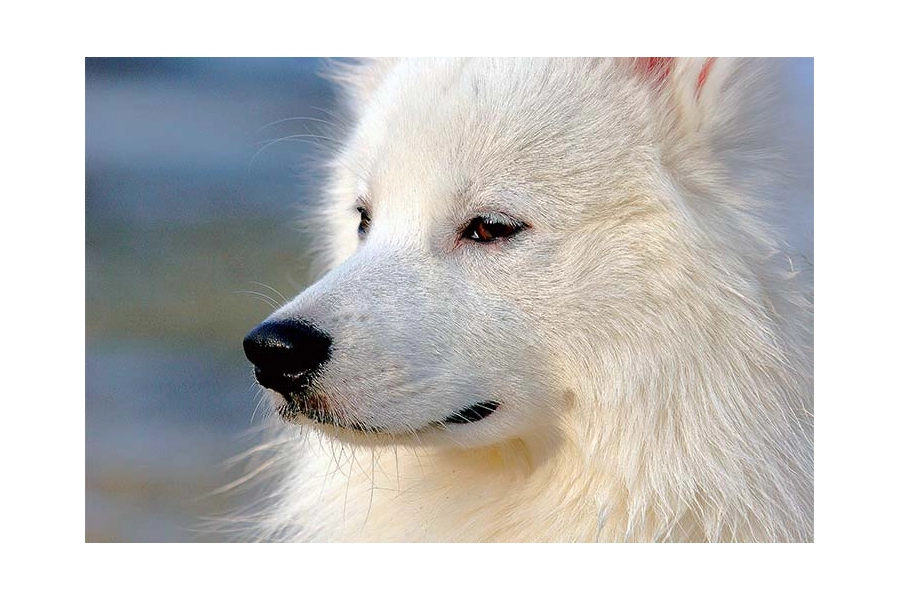
Spitz dogs possess a striking appearance and the temperament of an ideal companion. They are well-suited even for novice owners, the elderly, or families with children. Additionally, they can make excellent watchdogs—they have modest appetites and reliably alert their owners to the approach of strangers.


